





001
WHAT IS A SMART POD?
Add engineering capacity without building the whole hiring machine. Smart Pods are dedicated engineering teams embedded into your organization.
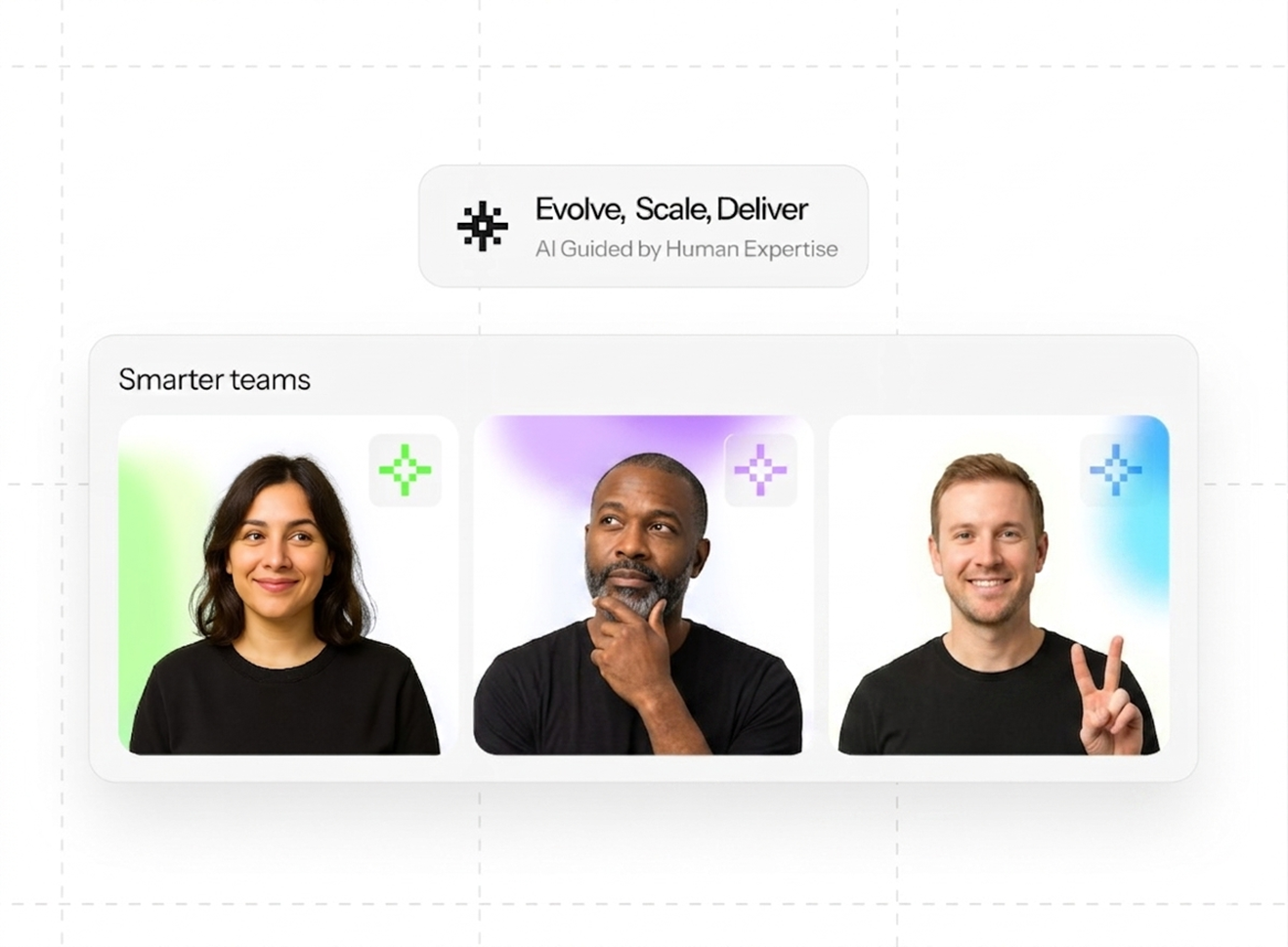
BETTER FIT
FASTER DELIVERY
SMARTER TEAMS
BETTER FIT
FASTER DELIVERY
SMARTER TEAMS
002
WHY SMART PODS?
The right talent, from the start
We go beyond resumes and role matching. Smart Pods are calibrated around real project context, execution needs, and team dynamics to ensure stronger fit, faster delivery, and lower hiring risk from day one.

01
Faster hiring
2-week hiring time. AI-enhanced. Expert-calibrated.

02
Flexible Team Growth
PODs that scale and adapt across projects and priorities.

03
Expert Advisory
Beyond talent—expert guidance from hiring to execution.
003
process
Smart Pods accuracy
A context-driven hiring process built for stronger fit, faster execution, and lower risk.
01
Real client context
We learn how your team actually works—not just the role on paper.
Role calibration
We define the real execution needs, priorities, and success criteria.
02
03
Scenario-led evaluation
Candidates are evaluated through realistic, live working scenarios.
Evidence-based matching
We combine live signals, experience, and contextual fit to reduce hiring risk.
04
05
Expert-calibrated recommendations
Every Smart Pod is aligned to your team, workflows, and delivery goals.
004
FAQs
Common questions
1
What is a Smart Pod?
2
How are Smart Pods different from traditional staff augmentation?
3
Who manages the Smart Pod?
4
Do we need an internal technical leader to work with a Smart Pod?
5
How quickly can a Smart Pod get started?
6
Can Smart Pods scale as our business evolves?
7
What types of companies benefit most from Smart Pods?
8
Are Smart Pods intended to replace internal teams?
9
Why choose Smart Pods instead of hiring internally?
10
What makes Smart Pods “AI-enabled”?
11
What happens if our needs change over time?